Features · AGI Future Foundation
The Physical-AI Governors
Software can be wrong and the worst thing that happens is a bad answer on a screen. A robot can be wrong and the worst thing that happens is a crushed hand, a toppled shelf, a vehicle in the wrong lane. That difference — between a mistake you can delete and a mistake you have to bandage — is the entire reason Robotics DAO exists as a plan. It is the thirtieth series in the Foundation’s intended W3 network, and its mandate, as stated on the Foundation site, is governing the commercial deployment of robotic and physical-AI agents. Not building the robots. Not selling them. Governing them: deciding where they may operate, under whose supervision, with what safety interlocks, and with what accountability when something goes wrong. It is the least glamorous job in the whole network and arguably the most important, because it is the job that stands between a promising machine and a person standing next to it. Like everything else in the network, it is planned, not yet operating — and this feature tells the plan straight, including how little of it exists today.
The machines that move
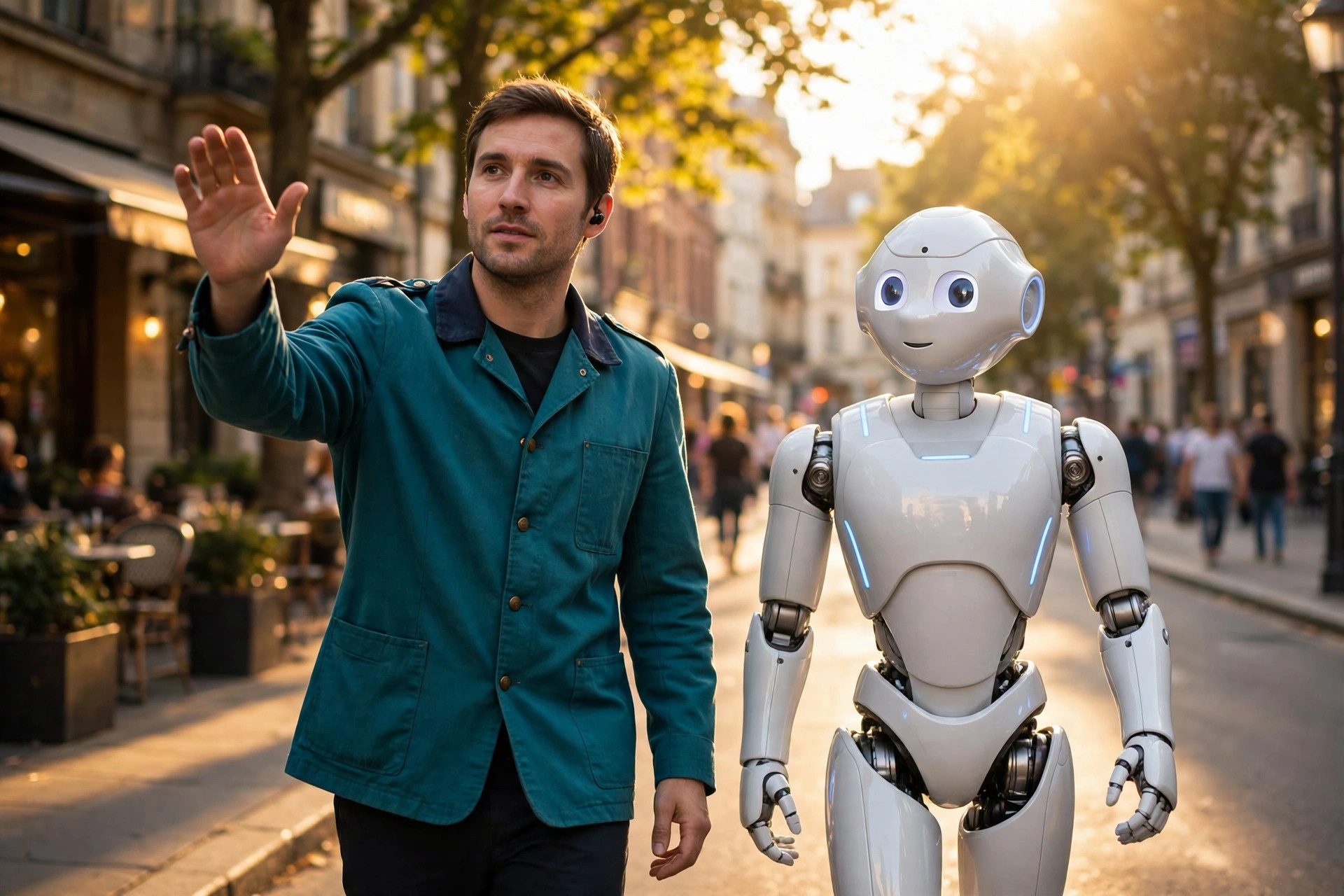
Physical AI is AI that acts in the world. That sounds like a definition and it is, but it is worth sitting inside it for a moment, because the whole governance problem follows from it. A language model acts on text. A robot acts on mass, momentum, and gravity. It lifts, carries, drives, handles materials, and works alongside people in spaces that were designed for human bodies — doorways, stairwells, loading docks, factory floors, hospital corridors. When a language model misunderstands a sentence, the output is a wrong paragraph. When a robot misunderstands a room, the output is a collision. The stakes are not metaphorical. They are measured in the same units as any industrial accident: force, speed, weight, and the distance between a machine and a person when something fails.
That is why the governance question comes before the engineering question, and why the series is framed as a DAO with a human Steward Council rather than as a robotics company. A robotics company asks how to make the machine work. A governance body asks whether the machine should be working here, in this place, next to these people, under these conditions — and what happens if the answer changes mid-shift. Those are different questions, asked by different kinds of organisations, with different incentives. A company that builds robots has every reason to deploy them widely and quickly. A body that governs deployment has every reason to deploy them slowly and carefully, and to be able to say no. The Foundation’s plan puts the governor in the network on purpose: if the same organisation that profits from deployment is also the one that approves it, the approval is not worth much. Separation is the point.
The commercial side of the mandate is equally specific in what it does and does not say. Commercial deployment implies robots working for paying customers in real settings — warehouses, sites, facilities — rather than demonstrations. But no deployment exists, no customer has been named, no site has been acquired or leased, and no order or pilot has been signed. The Foundation’s wider SmartCiti.X planning, Series 10, discusses robotics training, robotics manufacturing, and site acquisition as part of a proposed ten-million-dollar raise for a new SmartCiti.X corporation, but that is a separate proposed corporation, not this series, and no part of it has been formed, funded, or offered either. This feature does not borrow SmartCiti.X’s plans and present them as Robotics DAO’s achievements. If Robotics DAO ever governs deployments, the deployments it governs would need to be named, dated, and verified one by one. Until then, commercial deployment is a planned mandate, not a track record.
There is a temptation, when writing about robots, to write about the future — gleaming machines, seamless warehouses, a world rebuilt by tireless hands of steel. This feature will resist it, because the future is not what is on the record. What is on the record is a line in an internal list dated April 2026, a sentence on the Foundation site, and a public repository called robotics-site — a five-line landing stub — that describes the project as governing commercial physical-AI deployment. That is the complete inventory. Everything else in this feature is an exploration of what that mandate would require if it were ever exercised — the standards, the gates, the liability, the labour, the accountability — written so that a future reviewer can check the plan against the record, and the record against the plan. The exploration is the value. The inventory is the fact.
Governing, not building
The distinction between governing deployment and building robots is the point of the series, and it is worth dwelling on, because it is the distinction most likely to be lost in a pitch. A builder optimises for capability: faster, stronger, cheaper, more dexterous. A governor optimises for safety: slower where slowness protects people, more expensive where the expense buys a safeguard, less capable where capability outruns supervision. Those two optimisations pull in opposite directions, and an organisation that tries to do both will, under pressure, choose the one that pays. The plan separates them so that the choice is structural rather than personal — so that the people deciding whether a robot may work in a warehouse are not the people whose bonus depends on the warehouse being automated by Friday.
What would governing actually involve, day to day, if the DAO ever operated? Start with the questions a deployment would have to answer before it began. Where may the robot operate, and where may it not — which zones, which hours, which conditions. Under whose supervision, and what does supervision mean when the supervisor is watching a fleet rather than a single machine. With what safety interlocks — the physical and software stops that halt the machine when a person enters its space, when a sensor fails, when a command looks wrong. With what liability if it harms a person or damages property — who is responsible, the operator, the deployer, or the manufacturer, and what insurance and remedy exist. With what recourse for the people working next to it — who they complain to, what happens when they complain, and whether complaining costs them their job. Those are governance questions before they are engineering questions, and each one needs a written answer, approved by a named human, before a deployment passes its first gate.
The governance would also have to cover the robot’s whole life, not just its first day. Machines degrade. Sensors drift. Software updates change behaviour. A robot that was safe in January may not be safe in July, and a deployment approved once is not approved forever. A governing body would need to decide how often a deployment is re-checked, what triggers a re-check, and who has the power to halt a deployment between checks. It would need an incident record — published, not hidden — so that a failure in one deployment teaches every other deployment. It would need a retirement rule: what happens to a machine that can no longer be made safe, and who is responsible for taking it out of service. None of these arrangements exists today. They are the standard the series would be measured against, listed here so that a future reviewer can check them, not to imply they have been met.
There is also a subtler governance problem, and it is the one that makes this series interesting beyond the safety checklist. Robots do not just move through workplaces; they change them. A warehouse with robots is a different workplace from a warehouse without them — different sightlines, different noise, different rhythms, different risks, different skills. The people whose workplace changes deserve a say in how it changes, and any claim about training or jobs would need a signed agreement with a real workforce body before it is stated. That is not a courtesy. It is a governance requirement, because a deployment that the workforce experiences as something done to them will be resisted, sabotaged, or simply worked around — and a safety system that the people on the floor do not trust is a safety system that does not work. The governor’s job includes listening, and listening is not a feature of a checklist. It is a practice, and it has to be built into the institution from the start.
Finally, governing means being able to say no, and meaning it. A governance body that has never refused a deployment is not governing; it is stamping. The plan’s credibility will be measured, when the time comes, not by how many deployments it approves, but by whether it can refuse one — a deployment backed by money, by momentum, by a customer waiting — and survive the refusal. That is a test no document can pass in advance.
The safety gates
If the DAO ever operates, its central instrument would be the gate: a decision point that a deployment must pass before it proceeds, and that it can fail. The Foundation describes a similar pattern for AI models — an Alignment Evaluation Gate, with pre-registered safety thresholds and independent evaluation — and the physical-AI version would apply the same discipline to machines that move. The shape of it is straightforward to describe and hard to do well. Before deployment, the system is evaluated against written standards by people who did not build it. The evaluation is independent, which means the evaluators have no stake in the deployment going ahead. The thresholds are pre-registered, which means they are written down before the evaluation, so nobody can move the goalposts after seeing the results. And the outcome is binary in the only way that matters: pass, and the deployment may proceed under its stated conditions; fail, and it does not proceed, until the failure is fixed and the evaluation is run again.
The standards themselves would be the hard part. A safety threshold for a robot is not a single number. It is a set of them: how close may the machine come to a person, at what speed, with what force, under what conditions, and what happens when any of those limits is approached. It is also a set of procedures: how the machine is stopped, how it is restarted, who is allowed to restart it, and what is recorded when it stops. And it is a set of conditions: lighting, floor state, crowd density, the presence of children or visitors, the time of day. Writing those standards is expert work, and it would need counsel’s review and safety experts’ review, not just the DAO’s own enthusiasm. The standards would also need to be public — or at least available to the people working next to the machines — because a safety rule that the affected people cannot read is not a rule they can rely on.
Validation for Robotics DAO would be the most demanding in the network, because the failure mode is physical. It would not be enough to show a robot working in a video; validation would mean a deployment operating under the DAO’s rules, with safety checks passed, liability assigned, workers consulted, and an incident record that is published rather than hidden. The planned sequence is deliberately slow: written deployment standards first, reviewed by counsel and by safety experts; then a single small pilot, with a named human accountable and a named site; then a published review of what happened, including what went wrong; and only then any discussion of a second deployment. A series that scales before it has published one honest pilot review has skipped the step that justifies its existence. That discipline is also why the series page, the fullest in its group, still ends in the same place as the thinnest: the series is intended and planned, not formed, funded, or offered.
The gate model also has to handle the question of who watches the watchers. A DAO that sets its own standards, evaluates against them, and reports its own results has a conflict of interest built into its structure, and the plan’s answer is the human Steward Council — named humans, accountable, with the power to halt a deployment and the duty to publish what happened. But a council is only as good as its independence, and independence is only as good as its funding, its appointment process, and its protection from retaliation. Who appoints the stewards. Who pays them. Who removes them, and for what. Whether a steward who halts a lucrative deployment keeps their seat. Those questions have no answers on the record today, because there is no council, no operating agreement, and no published set of agent limits. They belong on the list of open questions, and they belong near the top of it.
There is one more gate worth naming, because it is the one most likely to be skipped under pressure: the gate between simulation and the real world. A robot that behaves safely in a simulated warehouse has proven something about the simulation, not about the warehouse. Simulation results must never be presented as real-world deployment evidence, and the plan’s honesty about its own metaverse gap is relevant here. Robotics DAO has no anchored metaverse fabric, no digital twin, no simulation environment of its own — and that absence is, paradoxically, a strength for a governor. A governor with no simulation to show off is a governor that has to judge deployments on real-world evidence, in real places, with real people. If a simulation environment were ever proposed, what would be needed first is a defined fabric, a stated purpose, and a clear statement of what is simulated and what is not. Until then, the absence is the fact, and the fact keeps the standard honest.
Liability, labour, and the human on site
Safety gates are the preventive side of governance. Liability is the other side: what happens when prevention fails. A robot will, eventually, harm someone or damage something — not because robots are evil, but because machines that move in shared spaces will, over enough hours, encounter a situation nobody predicted. The question is not whether it happens. The question is who is responsible when it does, and what remedy exists for the person harmed. Liability would need to be written down before deployment, not discovered after an incident: who is responsible when a robot errs — the operator, the deployer, or the manufacturer — and what insurance and remedy exist. That sentence is easy to write and hard to honour, because the three parties will each have lawyers, and each lawyer will have a reason why their client is not the responsible one. The DAO’s job would be to fix the answer in writing before the deployment, so that the injured person does not have to litigate it afterwards.
Insurance is part of that answer, but it is not the whole of it. Insurance pays. It does not apologise, it does not fix the machine, and it does not prevent the next incident. A governance regime that treats insurance as the answer has confused compensation with accountability. The fuller answer includes a published incident record, a duty to fix the cause, a power to halt similar deployments until the cause is understood, and a named human who is accountable for all of it. The named human matters most, because a DAO cannot be present when a machine fails. Every deployment would need a human accountable on site, by name — someone the workers know, someone who can stop the machine, someone who answers for it. That person is the governance, in the moment that governance matters most.
Labour is the third leg, and it is the one that determines whether the governance is real or decorative. The people whose workplaces gain robots deserve a say in how deployment happens, and any claim about training or jobs would need a signed agreement with a real workforce body before it is stated. That means consultation before deployment, not after; it means the workforce body sees the safety standards and the incident record; it means the workers know who to complain to and what happens when they complain; and it means the deployment can be changed — or stopped — because of what the workers report. A governor that treats labour as a stakeholder to be managed, rather than a party to be answered to, has misunderstood its own mandate. The mandate is commercial deployment, and commercial deployment happens in workplaces, and workplaces belong, in the most important sense, to the people who work in them.
There is a related question about what deployment does to work itself. Robots change the skills a workplace needs, the pace at which it runs, and the number of people it employs. A governance body that approves deployments without asking about those effects is governing the machines and ignoring the workplace. The plan’s answer, as far as it goes, is the connection to SmartCiti.X: the Trade Craft Academy, Series 10, is the planned place where workers would be trained to work beside robots, and the Robotics DAO would be the body that decides whether the deployments those workers face are safe. The two series are neighbours in the plan, not partners in fact — no agreement exists between them, and SmartCiti.X’s proposed plans are not this series’ plans. But the pairing shows the shape of the intended system: one series trains people, another governs the machines they will work beside, and the gap between them is bridged by written agreements that do not yet exist. Until they do, the labour question is an open question, and it should stay open until a workforce body signs something.
The human on site deserves a final word, because the whole architecture — the DAO, the council, the gates, the liability, the labour — collapses into a single person in the moment of failure. A robot malfunctions. A worker is hurt, or nearly hurt. Someone has to stop the machine, help the person, record what happened, and decide whether the machine runs again. That someone is a human, by name, on site, with the authority to stop the work and the protection to do so without losing their job. No agent can do that job. No DAO can vote on it in time. No smart contract can bandage a hand. The plan’s insistence that humans decide, humans sign, and humans move funds is, at its root, an insistence on this person — the one who is there when it matters. Governance, in the end, is not a structure. It is a person, in a place, with a responsibility that cannot be delegated to software.
Who decides, and who does the work
Under the Foundation’s intended venture-studio model, each W3 series is DAO-managed in its day-to-day operation: agents operate the series within limits set by humans, and a human Steward Council decides. That division is deliberate and non-negotiable in the model. Agents prepare proposals, analysis, drafts, and coordination; agents never sign legal documents, never move funds, never hire or fire, never offer securities, and never enact doctrine or charters. Humans execute. Every material decision — forming the series, opening a bank account, signing a partnership, spending money, or taking on an obligation — requires a named human’s decision and signature. For a physical-AI governor, that division has a particular urgency: the decisions the DAO makes are decisions about machines that move near people, and the cost of a bad automated decision is measured in injuries, not in incorrect text.
The Foundation sits above the W3 series as a mission gate, not as an owner in the ordinary commercial sense: a California nonprofit cannot be owned or controlled by a for-profit head, and the Foundation’s board must remain independent. Control in the intended model runs through written mission agreements and standards the series agree to, with counsel to design the exact structure. The Foundation’s public-benefit purpose — safe, equitable, and socially beneficial AI — is the standard every series is meant to be measured against, and the Windfall Clause framework is planned to apply across the W3 series: a legal pre-commitment, hardwired before profits, under which returns above a threshold, to be set by counsel, would flow to humanity through global public goods. The threshold, measurement, recipient, and enforceability are all blank for counsel today, and no series page states them as settled terms. For Robotics DAO, the mission gate would mean something concrete: a deployment that is profitable but unsafe does not pass, and a deployment that is safe but profitable is not enough on its own — it must also be equitable, with the workers’ interests represented and the public’s interest protected.
Governance of a series, once designated, would also need a written operating agreement, a named Steward Council, a compliance calendar, and separate accounts and records per series. None of that exists for this series yet, because the series itself does not exist yet as a legal entity. The governance described on this page is the intended model, not a description of an operating body. The closest planned relationships are with SmartCiti.X (Series 10), whose proposed corporation plans include robotics training and manufacturing; Cognition.X (Series 1), the intelligence the robots would run on; and Aerospace DAO (Series 31), the neighbouring physical-AI domain. No agreements, deployments, or shared systems exist between Robotics DAO and any of them today, and SmartCiti.X’s proposed plans are not this series’ plans. The relationships are planned, not operational, and they will stay that way until written agreements say otherwise.
Three practical consequences follow. First, no agent message, draft, or page like this one is a commitment by the series or the Foundation; only a named human acting within signed, written authority can commit either one. Second, any future deployment, partnership, or funding agreement for this series would need its own legal documents, its own issuer, and counsel review — the series name alone authorises nothing. Third, the public record for this series should grow only as real documents are created: a designation, an operating agreement, a council appointment, a signed standard, a published pilot review. Until then, the honest public record is the status banner at the top of this page.
What exists today vs. what is planned
What exists today
One line on an internal list: the April 2026 W3 series list names this series and its number. The Foundation itself is verified as filed: California Nonprofit Public Benefit Corporation, Entity No. B20260196664, Articles filed 2026-04-24, EIN assigned 2026-05-07. The public robotics-site repository is a landing stub only — a five-line README and a Pages shell, with no substantive code behind the name in this organisation — and its README carries a series-count wording that conflicts with the April 2026 internal list naming 33 sub-series, so this feature says 33. Robotics DAO is one of only eight of the 33 series with any repo coverage at all, and its coverage is a stub. The Foundation site describes the series as governing commercial deployment of robotic and physical-AI agents, and the stub repository carries the same description. That is the complete inventory. There is no formed series entity, no designation document, no operating agreement, no Steward Council, no bank account, no product, no users, no revenue, no partners, no customers, no sites, no timeline, no anchored fabric, no wallet, no contract, no token, no members, and no votes. This page does not present a plan as an achievement, and it does not fill the empty inventory with plausible-sounding detail.
What is planned
A DAO-managed series in the intended W3 network, operating day to day through agents within human-set limits, with a human Steward Council deciding, signing, and moving funds, and with the Foundation as mission gate under written agreements. Before any of that can happen, the series needs a written statement of purpose, a designated legal form, counsel’s review, written deployment standards reviewed by safety experts, a named steward, and a first stage-gate decision. Then, and only then, a single small pilot — a named site, a named accountable human, a published review of what happened, including what went wrong — before any discussion of a second deployment. Each of those is a human decision with a dated record. None has been made yet.
The gap between the two cards above is the work. It is normal for a planned series to have that gap; what would not be normal is pretending it does not exist. Readers, reviewers, and potential stewards should judge this series by what is on record, and should ask for the dated record behind any future claim that the gap has closed.
The open questions
A feature like this one should end on the questions, because the questions are the plan. The first is the standards question: what are the written deployment standards — safety thresholds, supervision, interlocks — and who, by name, is accountable at each deployment. The second is the liability question: how is liability assigned before deployment, and what insurance and remedy exist if a robot harms a person or damages property. The third is the labour question: which workers and workforce bodies have been consulted, and what signed agreements exist before any claim about jobs or training is made. The fourth is the independence question: who appoints the stewards, who pays them, and whether a steward who halts a lucrative deployment keeps their seat. The fifth is the evidence question: what counts as validation, and will the first pilot review be published honestly, including what went wrong, or will it be a success story with the failures edited out. The sixth is the scope question: where does Robotics DAO’s authority end and the authority of the deployer, the manufacturer, and the customer begin — in writing, before deployment, not after an incident.
None of these questions has an answer on the record today, and that is not a criticism of the plan. It is a description of where the plan is. The plan is a mandate and a model, not an institution. The institution will be built by answering those questions, one written document at a time, with named humans signing each one. The most useful thing a reader can do is to keep the questions visible — to ask them of anyone who claims the series is further along than it is, and to ask them again when the first pilot is announced, the first standard is published, and the first steward is named. The standard is on the record now, while the series is still a plan.
Where to see it
The public repository for this project is robotics-site on GitHub, where the project describes itself as governing commercial physical-AI deployment. The Foundation’s own series page for the same work is Robotics DAO, W3 Series S30, which carries the full mandate, the status banner, and the what-exists-today record. The nearest planned neighbours are SmartCiti.X (Series 10), Cognition.X (Series 1), and Aerospace DAO (Series 31) — planned relationships only; no agreements exist.
Contact: [email protected]. If you can help define, steward, or review this series — as a domain expert, a prospective steward, a researcher, or a reviewer — write and say which series you are writing about, who you are, and what you can contribute; a human steward will reply. Please do not send money, do not ask for investment terms, and do not treat this page as an invitation to invest: there is no offering here, no price, no terms, and no return is promised or implied. What is genuinely useful at this stage is specific, verifiable help: a written deployment standard, a safety question that exposes a gap in the plan, or an offer to review a draft document.
Nothing on this page is legal, tax, or financial advice, and no signing, membership, payment, investment, or offering is made here. This series is intended/planned, not formed, funded, or offered. AGI Future Foundation is a California Nonprofit Public Benefit Corporation, Entity No. B20260196664, filed 2026-04-24. No IRS 501(c)(3) determination letter is on file, so no tax-exempt status or tax-deductible donations are claimed.
← Prev: The Trade Craft Academy | Next: Worlds on Real Maps →